Introduction
Technology has really helped the producers of media content reach their audience in more diverse and dynamic way and get their products to them effectively.
According to Aging In Place (2019) Digital technology has redefined what people know as ‘media.’ They said a media company is not essentially where news is gotten from; a media organization is now believed to be an organization that passes information across the globe to over 3.2 million web users.
Technology has created a platform for organization to reach their audience effectively. Creating applications with lots of features have driven people to the apps. In the past, most people access most of their media product through newspaper, magazine, television, radio etc. but now the technology has allowed people to access all this information through their phones, laptops, iPad, desktop etc.
The result of this is that lots of people can use just their technological devices (phones, laptop, desktops etc.) to access all this traditional medium with more features.
That is why I am going to analyse 3 key trends that allowed all this to be possible and those trends that will be around in the next 10 years
- Influencer marketers
What is Influencer Marketing?
Influencer marketing is a common trend in which lots of media organizations uses in promoting their product. This trend is not only used by media organizations, its used by any type of organization all over the world. Influencers can vary from bloggers to celebrities who advertises or markets other people’s product for a reward or gain.
To properly understand influencer marketing, the term influencer should be explained. Influencer is a term which means, activists, comedians, bloggers, sketch artist and other social media user who uses their followers as fans (Abidin, 2016). ‘’A social media influencer is someone who has built loyal followers through their online content creation’’. (Bailis 2019). Influencers can also mean microcelebrity who keeps record of their lives in exchange for compensation (Abidin, 2014). An influencer can also be a celebrity who promotes movies or products through their page.
Influencer marketing is when organization associate with influencers to increase product awareness or conversions among a specific target audience. (Bailis 2019)
This trend is fast and growing and not slowing down. Influencer marketing industry is said to grow and reach between $5 billion and $10 billion by 2022 (SocialPubli 2019), all because 75% of marketers are using influencer marketing (Augure, 2015).
Influencer marketers use different channel to reach their audience, they use Instagram, Facebook and mostly YouTube to do a review of a product, and the response on those platforms are always magnificent. Influencers may influence many others, through their posts on social media indirectly through a flow of influence through their followers (Gladwell 2000).
In October of 2018, Shorr Packaging did an analysis of more than 1,500 YouTube user channels to know about the impact of YouTube’s influencer marketing. He got to know that adult and kids makes millions by recording videos of themselves opening boxes and playing with toys. (Wolinsky 2018).
The reason why influencing marketing is growing is the personalization of content. Customers are likely to buy a product if it makes a personal connection to humans. That is why the New Epsilon research of 2018 states that 80% of consumers are likely to buy a product when the a brand offer personalized experiences.
Influencers are not just getting popular these days, they have been in existence for a long time. Examples are the Queen and the Pope, they were believed to the be the earliest influencers. They influenced people’s opinion about drugs, by taking the drugs first to show that the drugs were safe for human consumption (Mechem 2018)
Another example is Nancy Green of 1890 who became the face of Aunt Jemima. R.T. Davis Milling Company In 1890, recruited Nancy Green to be the face of their pancake mix called “Aunt Jemima.” She represented a popular character, Aunt Jemima from a local minstrel show (Mechem 2018). Other examples are Santa Promotes Coca-Cola in 1931 and Fatty Arbuckle promoted Murad Cigarettes in 1905.
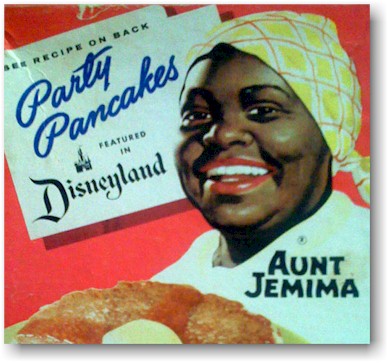
One of the major problems with influencer marketing is ‘authenticity’. That is why there has been a demand for micro- influencers, they are the YouTubers and instagrammers who do not have millions of followers but create content of a specific niche and attract customers that are interested in their speciality. (Influencity 2018).
Influencity (2018) said the future of influencer marketing is in the hands of micro-influencers as their contents are more valuable, they are accessible influencers, they are experts in the sector and they are profiles with whom clients can easily identify.
The other issue with influencer marketing is that the influencers fail to identify their audience thereby advertising the wrong product to the wrong customer. There is a swift change in marketing strategy from traditional to social but organizations must critically analyse their market and social media behavior of customers before giving their product to influencers (Sharma S. & Albus .T.2018 ). Lots of companies struggle with influencer marketing not because the channel doesn’t work but because the sponsored content is not properly planned, implemented and executed (Bailis 2019).
Organizations must be careful when paying influencers to promote their product because there are influencers with fake followers, engagement, clicks, likes and shares. That is why an influencer will say things like; ‘’like and comment in the comment section below and give this video a thumbs up…’’ to show authenticity of their followers and engagement on their page.
That is why Unilever and Procter & Gamble are now careful when paying influencers as they pay them based on engagement to prevent paying for fake followers. Keith Weed who is the Unilever Chief Marketing and Communications Officer thinks that about 40 percent of all organization do this now to prevent been duped by fake account.(Jack 2019).
The future of influencer marketing is bright, and it will still be in trend in the next 10 years. The only change may be that influencers may go as far as producing rich content as the world is looking into more creative and personalized advertising media content. The most significant factor of influencer marketing campaigns in the future will be the human element, which will assure creative, ground-breaking and quality content (Influencity 2018).
‘’In finding a long-term place in the world of digital, influencer marketing will be successful if there is greater access to data and increased care taken during the initial planning process’’ (Richard C. 2019)
- SUBSCRIPTION
Subscription is a trend that is growing significantly in the media industry. According to a report by Chen T. & co. (2018) 35% of the population subscribe to the media industry, 11 subscribe to the box and media industry, 4% only to box, and 51% none subscribers.
There are some apps or web that will tell you to pay first before assessing their content (itunes, spotify). Some will even let you read the first few articles or have a taste of their content and tell you to subscribe to access the rest (Deezer, quetext, grammerly etc.). Unfortunately, getting full access for the New York Times isn’t free, and it costs $15 for basic unlimited access to all articles, or $130 for a full year (Jansen M. 2019).
Nowadays people do not only subscribe to itunes or media content they also subscribe to e- commerce. According to Columbus L. (2018) ‘’The subscription to e-commerce market has grown by more than 100% percent a year over the past five years, with the largest retailers generating more than $2.6B in sales in 2016, up from $57.0M in 2011’’.
He further explained not everybody can afford this type of subscription. Subscribers are most likely to be 25 to 44 years old, to have salaries from $50,000 to $100,000, and live in urban areas.
Another type of subscription trend is the subscription boxes. This started with Columbia records with125,175 thousand members in 1995 and 16 million subscribers in 1996. In 2010 Birchbox started the modern e-commerce we know today as their member increased to 45,000 in a year and their subscription list skyrocketed to 800,000 and 1,777% in 2.5 years. (DesMarais C. 2016)
Subscription has been gaining popularity in recent years with app developers, moving away from the traditional model of one-time pricing with paid upgrades. Chuck (2018) in an article said some developers say the steadiness of revenue from subscriptions keep them floating and counters the under-pricing pressure and “freemium” models that have been pervasive in the App Store. The money gotten from subscription gives the developers motivation to maintain and keep refining their apps Chuck (2018).
Adobe and Microsoft have also joined the subscription trend and smaller developers have also made that switch too. Smile Software was one of the first to start charging their customer. Smile Software switched its venerable TextExpander in 2016, to a subscription plan. The consumer hated the idea which took the developers by surprise, so they gave the previous version for a single price and existing users a big discount (Chuck 2018).
Subscription is a booming trend. This act was dominated by the likes of newspapers, gyms, utilities, magazines, and telecommunications firms, but now subscription goes beyond that as its now being offered to more people. Business-to-consumer subscription; according to Daniel & Peter (2017) businesses have drew more than 11 million U.S. subscribers in 2017, and subscription has been growing at 200% yearly since 2011.
Subscription did not just start it has been in existence for a long time. The subscription model first began in the 1440s with the advent of the printing press, readers were able to enjoy their papers on the daily, weekly or monthly basis because subscription helped the printing press sustain itself and produce for its readers (The Editorial Team 2014).
The act of subscription hasn’t died in the media industry but has gone digital, almost all media organization either have a platform or media app in which they distribute their content to the audience and almost all the apps or online platform cannot be accessed without subscription. (The Editorial Team Aria 2014)
Also according to Aria ‘’Technology has always played a big role in the growth of the recurring revenue business model, highlighted in 1876 with the invention of the telephone by Alexander Graham Bell. Once telecom giant AT&T was formed in 1885 to connect local Bell companies, a monopoly was established on the communications market’’. The company could charge individuals monthly subscription fees to access the highly sought-after services.
Almost 13% of subscription businesses tracked by a subscription-related website ‘’My Subscription Addiction’’ have failed, and many more have been liquidated. Example is, Blue Apron who rose to become the largest meal kit delivery business in the U.S, went public in June, then saw its stock price fall 70%, making it the worst performing IPO of a major company so far in 2017 (Daniel & Peter 2017).
Even though subscription trends are growing the idea of Apple trying to sell all the apps is a bad idea. Bryan Jones a CodeKit developler tweeted “Subscriptions aren’t the future; nobody wants 26 subscriptions.” He also said subscriptions are a part of the future, for some certain type of app, but Apple attempting to sell every single app is bound to fail, he also said no one is going to pay for a $2 calculator.
James Thomson who is a PCalc developer took a different route. He did not follow the trend to price apps lower and lower nor went to a subscription. In the same Twitter thread, he wrote that the he believed the important thing is not to sell a $2 calculator but a $10 calculator. I don’t see the trend of subscription going anywhere in the next 10years if app developers create sensational apps people that will pay for it will pay for it regardless of the price. (Tournous C.L. 2018)
“The idea of the average household subscribing to Netfl ix, Hulu, Amazon, HBO Plus and YouTube Premium all at the same time is ludicrous,” said Farhad Massoudi, CEO of ad-supported OTT company Tubi, speaking on a panel at CES. He also continued to say an average household has an income of $54,000 a year and they are not going to spend all of it on subscription. (Frankel D. 2019)
- Apps creation
The history of the creation of apps can be traced to Apple. The Apple App Store was introduced in July 2008, a year after the first iPhone was released. It was a revelation which had 500 apps and 10 million applications were downloaded in the first weekend (Rowinski D. 2012)
The advent of apps is a revolution for organizations, it creates a medium for business and media organization to reach their target audience and get information across to them simultaneously. ‘’The ability to send instant, non-intrusive notifications to users is so desired that it is one of the major reasons why many businesses want to have a mobile app in the first place’’ (Rowinski D. 2012).
There are two types of notification; the first is an In-app notifications these are the notifications a user of the app will receive when they have opened the app. The other is a push notification which are the notification received irrespective of any activity on the app (Rowinski D. 2012). There are also instances where the push medium of notifications has delivered click-through rates of 40% (Chen A. 2018).
Apps are more effective to reach target audience because mobile users spend just 14% of the time on websites and 86% of their time on mobile apps and the time spent on mobile app is increasing — rising by 21% in 2015 from 2014 (Deshdeep N. 2015).
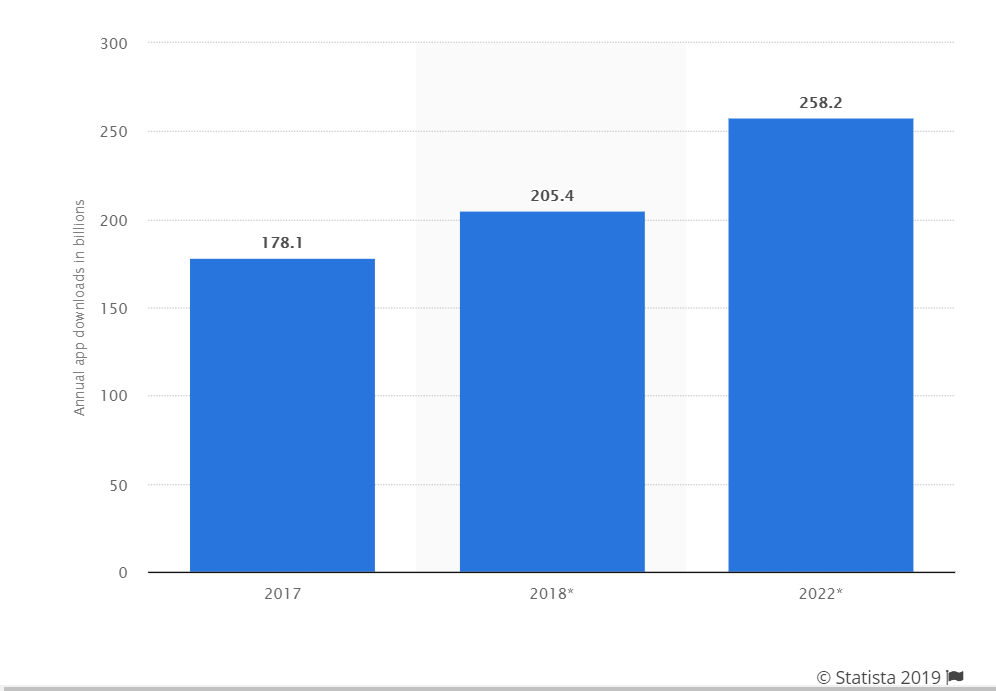
Alanysis of the diagram above shows that in 2017, 178.1 milllion apps were downloaded, in 2018, 205.4 mllion was downloaded and the chart predicted that by 2022, 258.2 million mobile apps will be downloaded. (Statista 2019). This is to show that the apps trend is not going anywhere in the next 10 years.
Statista also analysed the most downloaded non-gaming app in 2018 to be; Facebook, WhatsApp and Google. Facebook leading with 130million monthly worldwide app download.
They also analysed that large number of mobile games are also downloaded. ‘’All leading gaming app publishers on Google Play Store had double-digit download figures without any signs of slowing down’’.
Lots of companies and media organizations follow this trend, examples are the New York Times, The Guardian, Reuters, Amazon, Amazon, Bank of America, and Walmart. All this organizations uses the app to build their customer and product engagement strategies. Growing firms are also following this trend.
The mobile app is still going to be around in the next decade, the only thing is the apps will be upgraded to have more features. Artificial Intelligence is going to be included in lots of things including apps. Example is x.ai which schedules meetings for people which is very human like. Tuchscherer M. 2018 predicts that in the next 10 years people will be telling their phone to start the car and map a route to go and get something.
Artificial intelligence and machine learning are already in the apps but have not been developed properly. Chat box is an example of machine learning that is going to be a big thing in the future and Siri is an example Artificial intelligence and machine learning which can never be separated from mobile apps (Manchanda A. 2018).
One future attribute of mobile app will be the ability to streamline operations, reduce costs in hosting, give better storage, and loading capacity, are advantages of developing mobile apps over the cloud (Manchanda A. 2018).
Internet of things is also the future of app as it is said to grow $157.05 billion in 2016 to $661.74 billion by 2021 (Srivastav S. 2018).
The next-generation apps especially the gaming apps are all about AR and VR. The tech experts have predicted to generate revenue of $150 billion by the year 2020 (Pham B. 2019).
The development of greater apps can lead to the creation of a faster internet. 4G network that takes few minutes for an app to download can be upgraded to 5G where apps can be downloaded in seconds (Pham B. 2019).
All the trend analysed above shows that technology has always affected the media content we consume. Without technology all discussed above would not have been possible at all. Platform and content are also very important but without technology, all the good content will not reach the desired audience and there will be no platform to display content to the consumer.
BIBLIOGRAPHY
Abidin, C. (2014). Privacy for profit: Commodifying privacy in lifestyle blogging. In Selected Papers of Internet Research 15: The 15th Annual Meeting of the Association of Internet Researchers. Retrieved from https://firstmonday.org/ojs//index.php/spir/article/view/8800
Abidin, C. (2016). “Aren’t these just young, rich women doing vain things online?”: Influencer selfies as subversive frivolity. Social Media+ Society, 2(2), 1-17.
Aging In Place (2019) ‘’Technology In Our Life Today And How It Has Changed.’’ Retrieved from URL: https://www.aginginplace.org/technology-in-our-life-today-and-how-it-has-changed/ Accessed at: 02, April,019.
Augure (2015). ‘’The state of influencer engagement: 2015. Accessed at URL; https://www.launchmetrics.com/resources/ whitepapers/the-state-of-influencer-engagement-Retieved by: 27/03/19
Bailis R. (2019) ‘’The State of Influencer Marketing: 10 Influencer Marketing Statistics to Inform Where You Invest’’ Accessed at URL: https://www.bigcommerce.com/blog/influencer-marketing-statistics/#what-is-influencer-marketing Retrieved by: 30 March, 2019.
Chen A. (2018) ‘’New data on push notifications show up to 40% CTRs, the best performs 4X better than the worst (Guest post). Accessed at URL: https://andrewchen.co/new-data-on-push-notification-ctrs-shows-the-best-apps-perform-4x-better-than-the-worst-heres-why-guest-post/ Retrieved by: 30 March, 2019.
Chen T. & co. (2018) ‘’Thinking outside the subscription box: new research on e-commerce consumer’’ Accessed at URL: https://www.mckinsey.com/industries/high-tech/our-insights/thinking-inside-the-subscription-box-new-research-on-ecommerce-consumers .Retrieved by: 31 March, 2019.
Chuck L.T (2018) Macworld – Digital Edition ‘’How Apple’s push to subscriptions could save the App Store and cost you money’’. Vol. 35 Issue 11, p13-18. 6p. 4
Columbus L. (2018) ‘’The State Of The Subscription Economy, 2018’’
Daniel M. and Peter F. (2017) Harvard Business Review Digital ‘’Subscription Businesses Are Booming. Here’s How to Value Them’’. PG 1-6
Deshdeep N. 2015 ‘’10 Reasons Why Mobile Apps are Better Than Mobile Websites’’ Accessed at URL: https://vwo.com/blog/10-reasons-mobile-apps-are-better/ Retrieved by: 4th April, 2019.
DesMarais C. 2016) ‘’Here’s How Much People Like Their Subscription Boxes (Infographic)’’ Accessed at URL: https://www.inc.com/christina-desmarais/heres-data-showing-the-crazy-growth-of-subscription-box-services-infographic.html Retrieved by: 7th April, 2019
Frankel D. (2019) Broadcasting & Cable Raises Prices as Consumer Subscription Spending Tightens Vol. 149 Issue 1
Gladwell, M. 2000. The tipping point: How little things can make a big difference. New York, NY: Little Brown. Accessed at URL :https://www.forbes.com/sites/louiscolumbus/2018/03/04/the-state-of-the-subscription-economy-2018/#4ab2265d53ef Retrieved by: 10th April, 2019
Influencity (2018)‘’Influencer Marketing trends for 2019’’ Accessed at URL: https://influencity.com/blog/en/influencer-marketing-trends-for-2019/ Retrieved by: March 24 2019
Jack N. (2019) Advertising Age ‘’HOW TO SUCCEED WITH INFLUENCERS: Influencer marketing is becoming a bigger piece of the toolbox. Here’s how not to mess it up’’. Vol. 90 Issue 2, p19-19.
Jansen M. (2019) ‘’The Best new apps for android and ios’’ Accessed at URL: https://www.digitaltrends.com/mobile/best-news-apps/ Retrieved by: 5th April, 2019
Manchanda A. (2018) ‘’12 Mobile App Development Trends to Watch Out for in 2019’’ Accessed at URL: https://www.netsolutions.com/insights/12-mobile-app-development-trends-to-watch-out-for-in-2019/ Retrieved by: 3rd April, 2019
Mechem B. (2018) ‘’The History of Influencer Marketing: How It Has Evolved Over the Years’’ Accessed at URL: https://www.grin.co/blog/the-history-of-influencer-marketing-how-it-has-evolved-over-the-years Retrieved by: 3rd April, 2019
Number of mobile app downloads worldwide in 2017, 2018 and 2022 (in billions) Accessed at URL: https://www.statista.com/statistics/271644/worldwide-free-and-paid-mobile-app-store-downloads/ 2019 Statista Retrieved by: 5th April, 2019
Pham B. (2019) ‘’Top Mobile App Development Trends in 2019’’ Accessed at URL: https://customerthink.com/top-mobile-app-development-trends-in-2019/ Retrieved by: 3rd April, 2019
Pressroom (2018) Epsilon ‘’Digital Transformation Team Helps Brands Assess the People, Process and Technology Required to Deliver the Best Personalized Customer Experiences’’ Accessed at URL: https://us.epsilon.com/pressroom/new-epsilon-research-indicates-80-of-consumers-are-more-likely-to-make-a-purchase-when-brands-offer-personalized-experiences Retrieved by: 3rd April, 2019
Richard C. (2019) Business + Management ‘’Influencer marketing: addressing the challenges’’ Vol. 33 Issue 1, p38-39. 2p.
Rowinski D. ‘’The history of apps can be traced to the advent of Apple’s App Store Starting in 2008.’’ Accessed at URL: https://readwrite.com/2012/02/07/infographic_history_of_mobile_app_stores-2/ Retrieved by: 7th April, 2019
Sharma .S. & Albus .T.2018 Influencer Marketing Strategies for Indie, Mass and Luxury Brands Vol. 186 Issue 7, pDE11-DE14. 4p
SocialPubli (2019). ‘’2019 Influencer Marketing Report: A Marketer’s Perspective’’ Accessed at URL: https://socialpubli.com/blog/wp-content/uploads/dlm_uploads/2019/01/BACKUP-The-State-of-Influencers-Marketing-seen-by-advertisers-2019-.pdf Retrieved by: 7th April, 2019
Srivastav S. (2018) ‘’11 Mobile App Trends That Will Dominate in 2018’’ Accessed at URL: https://appinventiv.com/blog/11-mobile-app-trends-that-will-dominate-2018 Retrieved by: 8th April, 2019
The editorial team (2014) ARIA ‘’The history of recurring revenue’’ Accessed at URL: https://www.ariasystems.com/blog/author/editorial_team/ Retrieved by: 9th April, 2019
Tournous C.L. (2018)‘’How Apple’s push to subscriptions could save the App Store and cost you money’’ Accessed at URL: https://www.macworld.com/article/3301860/apple-push-to-subscriptions.html Retrieved by: 10th April, 2019
Tuchscherer M. (2018), Future or Anything. ‘’What’s the Future of Apps?’’ Accessed at URL: https://www.futureofeverything.io/ask-thought-leaders-whats-future-apps/ Retrieved by: 4th April, 2019
Weiss M. (2018) Digiday Research: ‘’Five key trends that will shape media and marketing in 2019’’ Accessed at URL: https://digiday.com/media/digiday-research-five-key-trends-that-will-shape-media-and-marketing-in-2019/ Retrieved by: 7th April, 2019
Wolinsky J. 2018 ‘’YouTube Influencer Marketing Trends For 2019’’ Accessed at URL: https://www.valuewalk.com/2018/12/youtube-influencer-marketing/ Retrieved by: 7th April, 2019.



 Aishat's blog