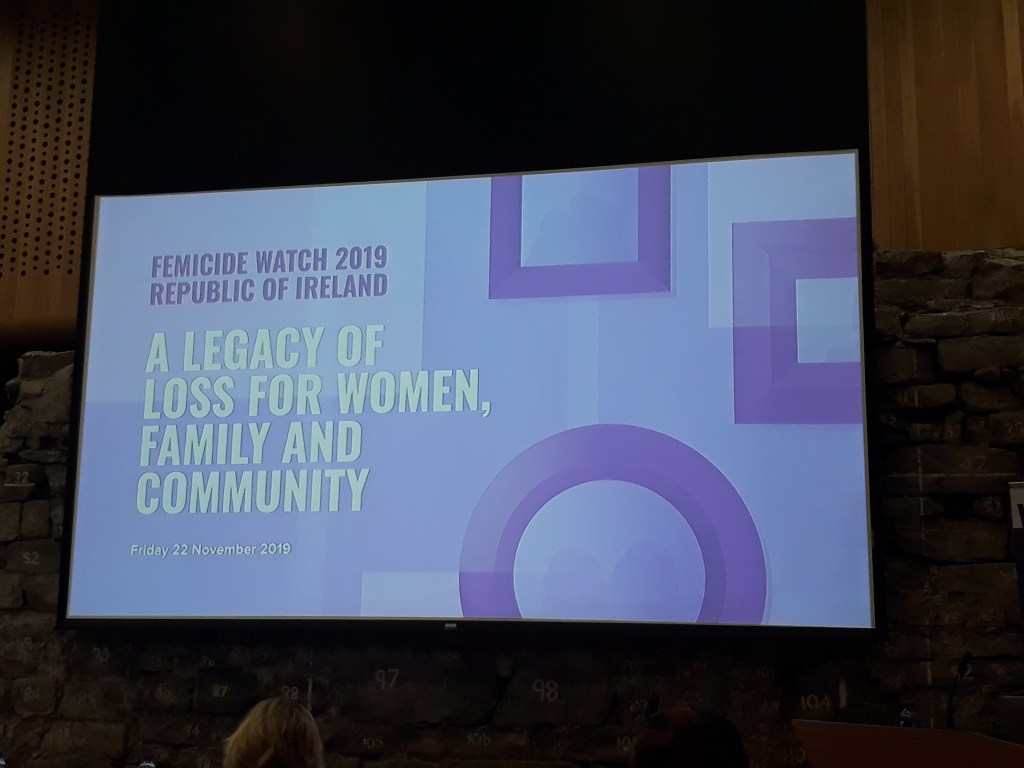
Ms. Sarah Benson the CEO of Women’s Aid said that her goal is to make sure that victims of abuse reduces drastically. She said this at the Dublin City council office during the lecture on the Femicide report on Friday, [ 22 November 2019].
Ms. Benson said 230 women have been killed and 16 children have died alongside their mother since the Women’s Aid started reporting in 1996, 87% of them were killed by men they know, 56% were killed by current boyfriend, husband or partner and 5 women have died in the Ireland this year.
She said that the organization lunches its new report named “A legacy of Loss- Femicide Watch 2019” which reports that women are more likely to die in their own homes and by men known to them. She expresses her worries about women being in danger in a place where they ought to feel the safe (that is their homes).
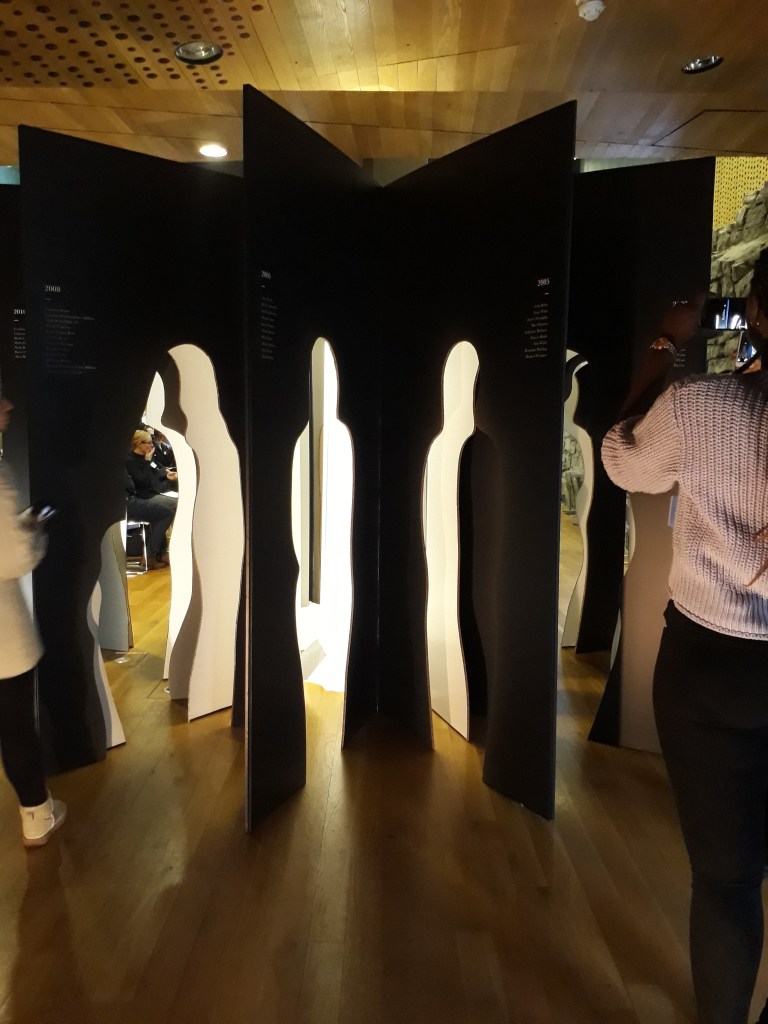
Image showing the exhibition called “Legacy of Loss” shots taken by Aishat Ibrahim
During the event, victims, professionals and experts were present at the event. Mr Ryan Hart who was a victim was invited to tell his story. Mr Hart narrated how his father had killed his mother (Claire) and sister (Charlotte) using a sawn-off shotgun in broad daylight and then committed suicide after. He and his brother Luke speak openly about their story and uses it to raise awareness of the coercive and controlling behaviour their family had suffered.
“Men like my father believe that they are entitled to control and abuse their family and we have to have the media challenging these believes.” Mr Ryan Hart
What he and his brother found reported in the media days after the murder is excusing his father’s action and the media blaming them for provoking their father rather than focusing on the victims which is his sister and mother.
Mr Hart said that in some report his father was named a “nice guy” which to him was wrong. He said the media needed to reform how they report homicide cases. He continued to say most murders in the media were reported by blaming the actions of the murders, on mental health, addiction and alcohol, which in the process is giving limelight to the evil doers and creating room for more people to kill.
He said journalist should not ask neighbours what the attacker was like, “because an abuser keeps their abuse hidden”.
“He has controlled the victim’s life now he’s going to control the narrative too” Says Mr. Ryan Hart
He said journalist giving prominence to reporting from the murderer’s perspectives have created a platform for murders to control victims and control the narrative too. He and his brother Luke found out that his father has been reading articles on how to kill the whole family before he actually did.
Dr. Anne O’Brien a lecturer at Maynooth University also spoke at the event where she said sensitive cases such as intimate partner homicide when reported, are decontextualized, blames are shifted on the perpetuator rather than the victims, and patterns to sources journalist uses remain the same rather than stories from family of the victims or experts.
Ms Benson implored the government to introduce proper resources and legislate formal Domestic Homicide Reviews (DHRs) and increase the support for families bereaved due to domestic homicide.
The event was chaired by Claire Byrne who is a broadcaster from RTE. Experts like Nora Gibbons and Frank Mullane who are experts were present. Kathleen Chada, who is a victim whose sons were murdered by their father could not make it to the event today to tell her story and share her grieving process.
If you have been abused or knows anyone that need help, the 24hour National Freephone Helpline is 1800341900. Save a life today/ save yours.
picture by me showing the entrance to the RDS fair
The contemporary craft and design fair took place today [ 6TH December, 2019]at the RDS main Hall, Ballsbridge, where lots of designers, craftsmen and retailers had their product displayed on the stall ready to sell.
The event started at 10 am, where lots of people came into the trade fair to see different craft. Present at the stalls are fashion wears, arts, food, snacks, carvings, fabrics, jewelleries, etc. There were lots of interesting and wonderful products and art work at the fair.
At the trade fair there were green and organic products. Nicola Brown is a lady who makes all her clothing deigns from leaves and honey. Another is Mr Alex who uses moss as a product to make beautiful home decorations.
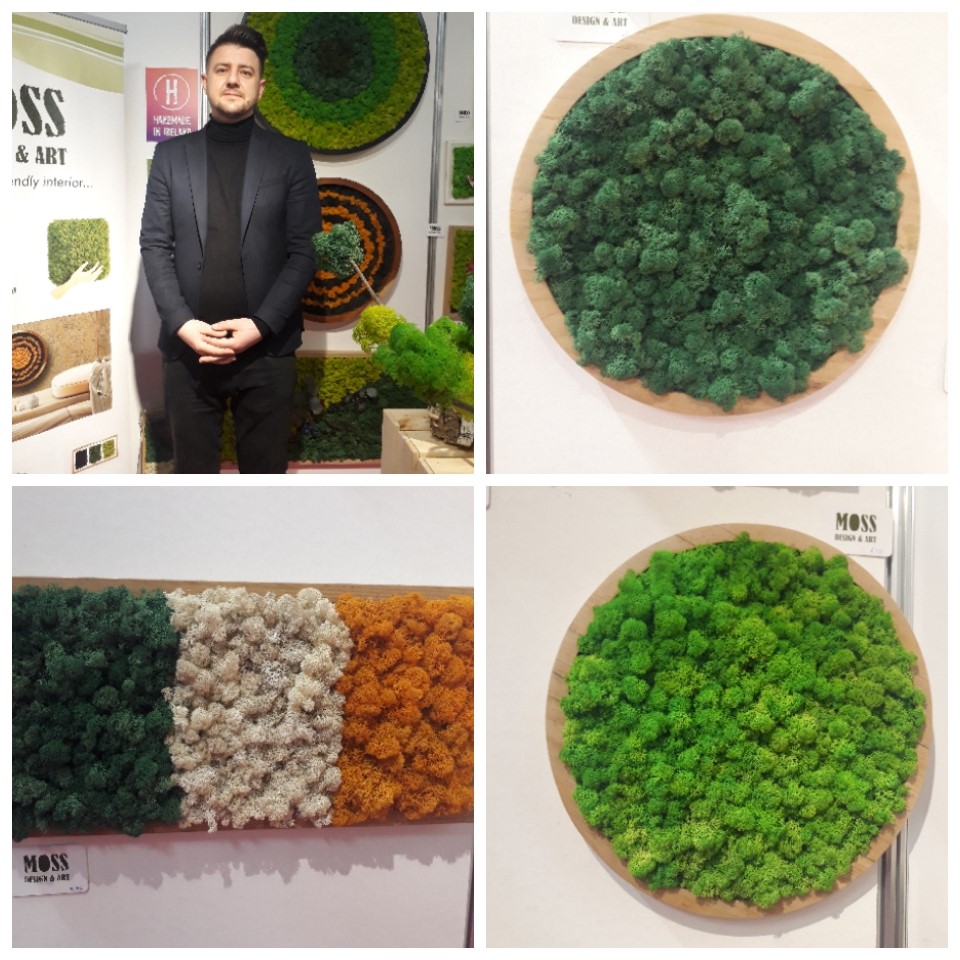
Image of Mr Alex who makes moss designs and his arts. photo by: Aishat Ibrahim
Mr Alex from Transylvania in Romania is a Moss Design artist. He has been in Ireland for the past 10years. He makes all his art work from moss. The idea from the moss came from the fact that he had a room infected with mould and wanted to get rid of it, so he put some moss in his room to extract the moisture from the room. During the interviews he spoke of the importance of the moss.
Mr Alex explains that the moss can absorb up to 40 percent of the moisture in room and since they remove mold from rooms they are good for asthma patient. He also said the moss can only grow in northern countries like Finland, Norway and Poland.
To treat them he uses glycerine and water. He also adds food dye and colour to make them beautiful and attractive and paints them into different colours. All he uses is organic nothing toxic and it doesn’t need to be trimmed as it doesn’t grow anymore. “The moss is a reindeer moss and it can stay soft up to 15 years without any maintenance.” Said Mr Alex
“To maintain the moss freshness, it shouldn’t be put near the heater as that can make it dry. It can be fixed once it has been taken away from the heat and put in a moist room.”
Figure 3 Image of Ms Anouk O’Connell and Ms Frederique van Buurenwho makes product from merino wool. photo by: Aishat Ibrahim
Ms Anouk O’Connell and Ms Frederique van Buuren are the owners of Olannmor and they have only been in business for only two years. Olannmor is a company who makes chunky knit, home decoration and fashion accessories using unspun merino pure wool from merino sheep. Ms O’Connell said the sheep are not present in Ireland. “The merino sheep are warmer climate sheep and are available in countries such as New Zealand, south America and the wool is incredibly soft” said Ms O’Connell.
Ms Buuren said the company have work shops regularly where they teach people how to knit regularly. The workshop consist of more than 20 people where they get together and she and her partner teaches people how to make blanket from start to finish and everyone goes home with a finished product.
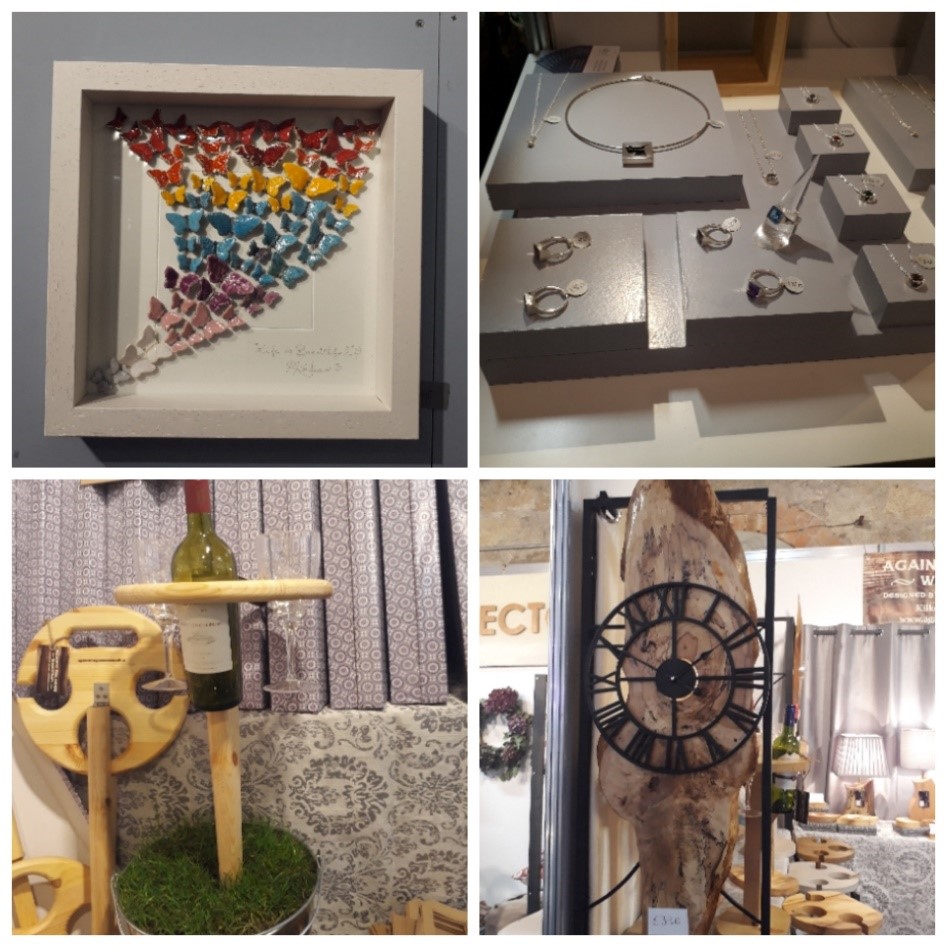
Image showing other people’s trade
The atmosphere around the event was a calm, bright and beautiful as lots of people came with their work/ craft to have them sold. All the products at the job fair are handmade and lots of stores came to sell their product at the same time showcase their craft. Some product go as high as €450.
Photojournalism came popular when photographers could without stress take cameras into war zones. For the first time, ordinary citizens could see the impact of the war right there in their newspapers. It was a critical minute in photography and it turned out to be increasingly more genuine between the Civil War and World War II. The advent of war photography showed the evil of war to the people. It brought the fear of the war right into the homes and comfort zones of people thereby reducing the war. When people saw the images of the war, they began to have empathy toward the war as the dead body in those images could be their family too. Photojournalism has a role in constructing peace in conflict areas
Colombian scholastic Germán Rey, directed a discourse between four photojournalists: Álvaro Ybarra(Spain) João Pina (Portugal), Stephen Ferry (United States) and Natalia Botero (Colombia) in an occasion titled, “Photojournalism, memory and search for truth,”.
In the discourse Natalia Botero believed it is vital to record conflict or war with photographs since it powers people to understand the contention from a different point of view and makes “the conflict more human.” Many people in power approach war or conflict from a top-down method, as opposed to a base- up method, which harms people on-the-ground in strife zones. The specialists concurred that photojournalism can fill in as an apparatus to help fill this hole, moving the emphasis on people who are influenced. Photojournalist has always used images to communicate or tell a story to the public.
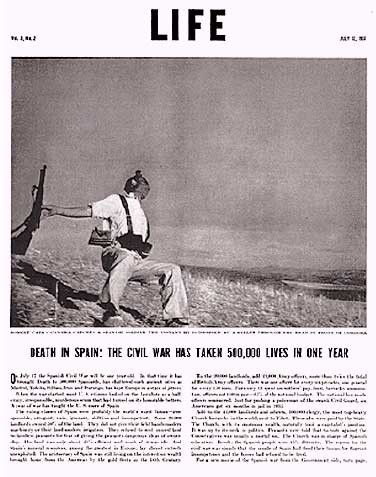
First image
Photojournalist; Robert Capa Death of a Loyalist Militiaman, Cerro Muriano, Córdoba front, Spain, September 5, 1936. published in the Life Magazine.
The earliest history of war image that caused controversy in the world, is the image above by Robert Capa which real name is Andre Friedmann popularly known as Robort Capa.
Capa was a war photojournalist in the 1900s. Robort was born in Germany but left Hungary in 1930 for Berlin. Capa went to school in Deutsche Hochschule für Politik as a student of journalism and political science.
Later he worked as an assistant in the darkroom at Deutsche Photodienst Agency. He later moved to Spain from Germany in 1933 due to the rise of the Nazis where he shared the darkroom with Henri Cartier-Bresson and Chim (David Seymour).
He covered a lot of war during these periods, example is the Death of a loyalist soldier in 1936 which tagged him ‘the greatest war photographer in the world’. He later died when he went to cover the French war in Indochina for LIFE magazine in 1954 when he stepped on a landmine.
Robert Capa in an interview said he made his original photo of the Spanish Civil War while never glancing through his viewfinder. Broadly thought to be a standout amongst the best battle photos ever constructed, and the first to demonstrate front line death in action, Capa said in a 1947 radio interview that he was in ditches with Republican military men.
The men would pop over-the-ground to charge and shoot old rifles at a machine gun watched by troops faithful to Francisco Franco. Every time the military men would get gunned down. Amid one charge, Capa held his camera over his head and pressed the shutter speed.
The outcome of the shot is the image of a soldier who slumbered downward in a dramatic way. During the 1970s, decades after it was distributed in the French magazine Vu and LIFE, a South African columnist named O.D. Gallagher asserted that Capa had disclosed to him the picture was arranged. Be that as it may, no affirmation was ever displayed, and most trust that Capa’s is a veritable authentic photo of a Spanish minute man being shot.
Capa’s picture raised war photography to another dimension well before writers were formally implanted with battle troops, appearing critical, if hazardous, it is for photojournalist to be amidst the activity.
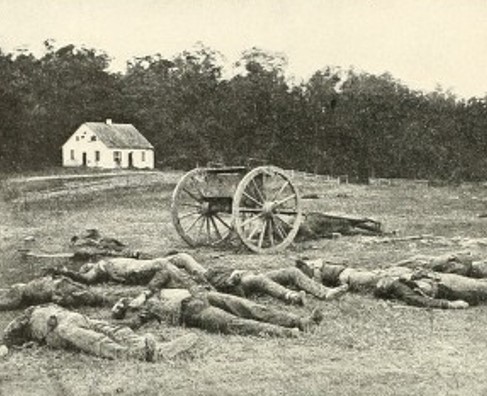
Second image
Dead Confederate artillerymen, photographed by Alexander Gardner in front of Dunker Church after the Battle of Antietam, September 1862 published in the New York Times in 1862
The one-day battle of Antietam marred over 23.000 people, making it the bloodies day in history. The Union triumph at Antietam brought about President Abraham Lincoln issuing his Preliminary Emancipation Proclamation on September 22, 1862. The war started in September 17, 1862, between Confederate General Robert E. Lee’s Army of Northern Virginia and Union General George B. McClellan’s Army of the Potomac, close to Sharpsburg, Maryland and Antietam Creek. (Vermilya D. 2003-2109)
Photos of the Civil War rapidly ended up well known among the overall population in view of the stunning and realistic nature of the photographs. These photographs gave individuals at home the opportunity they never had to see the wickedness of war with their own eyes. War was all the time romanticized in the Victorian time and these pictures clarified that the demise and destruction were not something to joke or boast with.
The kind of photography utilized during the civil war was known as wet-plate photography. Taking of pictures then was tedious and time consuming. Photojournalist needed to carry majority of their overwhelming hardware, including a portable dark room, to the war zone on a wagon.
The photojournalist Alexander Gardner was born in October 17, 1821 – December 10, 1882. Gardner was born in Paisley, Scotland in 1821. He lived in Washington until his death in 1882. Regarding his work he said, “It is designed to speak for itself. As mementos of the fearful struggle through which the country has just passed, it is confidently hoped that it will possess an enduring interest.’’
This image really caused uproar in New York when the New York TIMES mentioned the images and where to go see them. People were really shocked by the image that they refer to those images as bringing the dead right to their doorstep. The image brought change in the society.
It changed how people saw the war and what ‘conquering the war’ meant (a son losing his father, a wife losing a husband etc). Although the cameras in those times cannot take motion or action images. Gardner still tried to take still images to show the horror of the civil war and in those images, I could see the sadness and vanity in the images. For the images to get to me in this century I wonder how people then must have reacted to the images. Gardner reportedly look 70 pictures of the war within two days
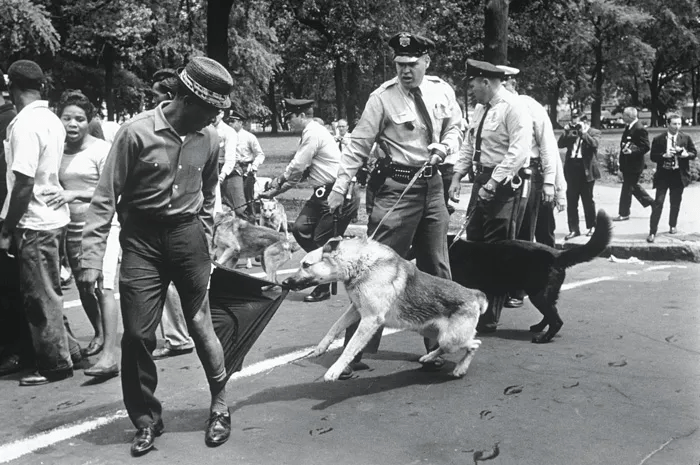
Third image
Image about the Birmingham, Alabama civil right movement. Image taken by Charles Moore in 1963 and the image was published in the Life Magazine
Controversial images have changed the opinion of the public. One of these issues was the Civil Rights development somewhere between 1954 and 1968 all through America. One of these high-clash territories was Birmingham in Alabama. (Goldberger B.& Co 2019)
From the image above police brutality to the people of colour can be seen. This image shows fear and oppression the police man installed on the people and how they could easily use their power to oppress the civilians.
Here, dark occupants and partners always conflicted with white power in a battle to end segregation. Charles Moore, a photographer for Montgomery Advertiser and Life got himself part of these contentions. (Goldberger B.& Co 2019)
This local Alabaman and child of a Baptist minister saw the viciousness and wound up dismayed by it. Even though he caught numerous pictures concentrating on this development, it was the above picture that caught the segregation as a reality. (Goldberger B.& Co 2019)
The violence was fierce, yet normal and easy-going. The picture distributed in Life magazine enabled the remainder of the world to perceive what was going on.
When the picture was published in the life magazine, it quickly became obvious to the rest of the world what Moore had long known: ending segregation was not about eroding culture but about restoring humanity. (Iveta 2017) The Civil Rights Act was passed a year later, abolishing segregation.
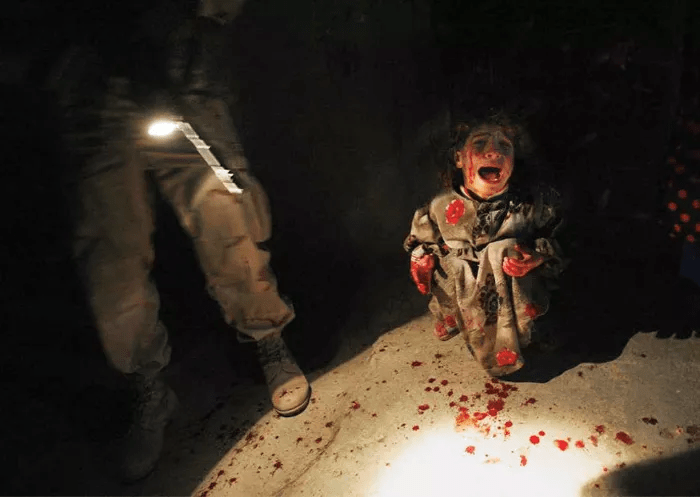
Forth image
Iraqi Girl at Checkpoint. photographed by Chris Hondros in 2005
War photographers still take touching war photographs in these recent times, example is the image above. This image showed the horror of war and how it costs a little girl her parents and almost claimed her life too.
This hard-hitting picture of Samar Hassan occurred in 2005 when the war in Iraq was at its most brutal. Positioned with the Army unit was Chris Hondros a war photographer. He witnessed when the soldiers shot at a family of three thinking the truck conveyed insurgents and suicide bombers.
The soldiers killed Samar Hassan’s parents on their way back from Iraqi city of Tall ‘Afar and she was left covered in blood wailing at the back seat. From the image one could feel the young girls sorrow, pain and fear. The photographer Hondros took the image of the girl when she was taken out of the car. (Goldberger B.& Co 2019)
He turned his camera towards the young girl when the shooting happened. He transmitted the pictures quickly, distributed the world over the next day.
Considering this picture, the US military overhauled their checkpoint systems. They likewise experienced harsh criticism since for what reason would they say they were executing the very individuals they were there to free or protect. (Goldberger B.& Co 2019)
This is said to have been happening, but no media coverage has exposed such issue but with this image the U.S. government regulated the checkpoint system. This image brought people together to know the horror the US army cause to the people
This rapidly ended up a standout amongst the most dubious pictures in the media. You can nearly hear the young lady’s shout. (Goldberger B.& Co 2019)
Hondros the photographer was killed during the civil war in Libya in 2011.
Other images
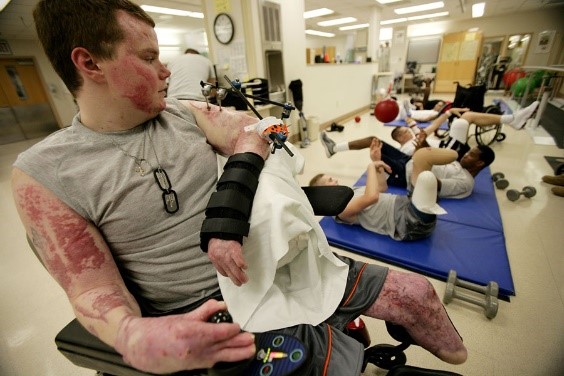
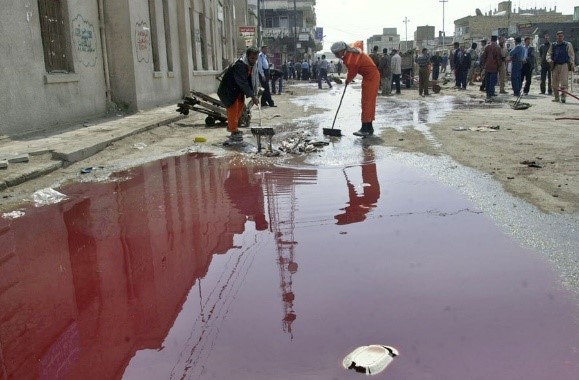
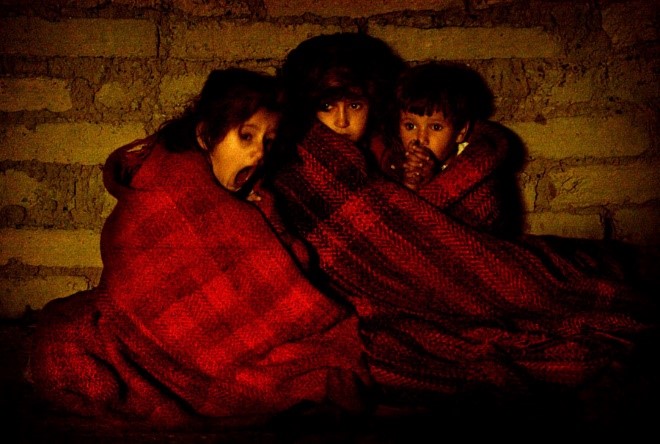
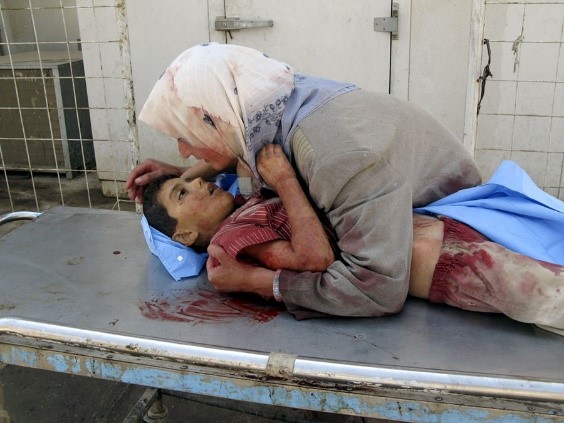
One big war photojournalist still cover is the Iraqi war. Although the images still haven’t stopped the war, but they have received sympathy from the members of the public all over the world. Through publishing these images below aids have been provided to the people affected by the war.
The first image depicts the horror of the war on soldiers. Marine Sergeant Kevin Downs, 21 seen in a rehabilitation centre exercising his body. He had a fourth degree born and lost both his leg due to the war. Image taken by Brent Stirton. Alan Taylor (2018)
The second image taken by Ali Abu Shish of the Reuters shows how Iraqi workers cleaned dirt beside a pool of blood of 115 people killed by a sucide bomber and wounding 148 people on February 28, 2005.
The third image was taken by Damir Sagoli of Reutrers in 2003. This image show terrified Iraqi children protecting themselves from the cold after they’re taken outside of their house by the U.S. army during an early morning raid. Alan Taylor (2018)
The forth image was taken by Adem Hadei in 2007. The image shows a grieving woman holding her dead six-year-old boy who was murdered by gunmen in Iraq. Alan Taylor (2018).
All these images were taken by people who felt the need to inform people of the horrors of war even though in the processes they automatically put themselves in danger. Some of these war photographers may be lucky and have a good life after the war, but most of them are always murders or killed during the war.


 Aishat's blog